Tuesday, July 25, 2017

'Memory Almost Full' by Paul Mccartney


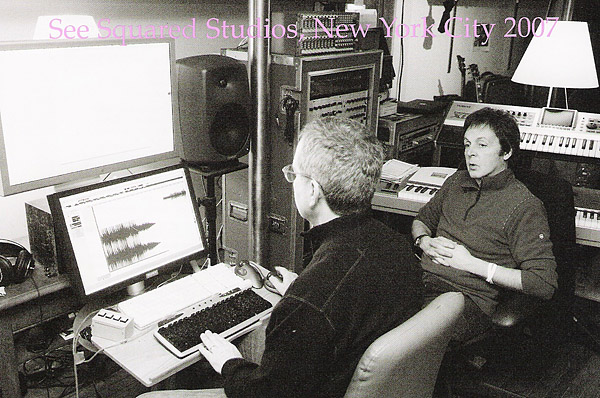
After hitting a critical high note and scoring a Grammy for Best Male Vocal with 2005's plaintive but pleasant and surprisingly Beatle-y 'Chaos and Creation in the Back Yard', Paul returned in 2007 with 'Memory Almost Full'. Its strength resides in McCartney's ability to sound familiar and faithful to his past without sounding tropey, unlike other artists who emulate the Beatles sound; Paul sounds like he's just at his best.

McCartney stomps and strums us into the collection with a mandolin on 'Dance Tonight'. He wrote this tune not knowing how to play the instrument and it shows in some of oddly cheery chords as he sings 'you can come over my place if you want to, you can do anything you want to do'; very much in the spirit of 'All Together Now' from the Yellow Submarine album.

From there, through all its dynamics this album never loses steam. The music is at once current - particularly in its dilated 21st Century pop production - and unabashedly retro. It doesn't feel like McCartney's previous few albums where either the Beatle sound was more being chased than achieved (Flaming Pie, Driving Rain) or his own less corked solo sound more grafted with than lifted by decade specific production (80's McCartney). MAF is a quality listen because the rich instrumentation and production intertwine with the Paul's composition. The believable and compelling vocal delivery on 'Chaos and Creation in the Back Yard' endures throug MAF’s variety of moods and textures. This makes sense since songs for both albums were composed around the same period. For the first time in recent memory, more songs than not feel like legitimate classics that can stand the test of time and genuinely gratify fans hungry for new Beatles quality music. From breezy acoustic pieces like 'Feet In the Clouds' to Little Richard channeling rockers like 'That Was Me' and 'Nod Your Head' to cheery experiments like 'Vintage Clothes', to the stormy slow-mo dreamscapes of 'House of Wax', from pop reminiscence in 'Ever Present Past' and to shuffling, novella piano grooves in 'Mr. Bellamy', 'Memory Almost Full' unloads enough to make new memories while revelling in old ones. My personal favorite on this album is 'Gratitude' for its deceptively straight 6/8 timing and strikingly youthful 'Helter Skelter' style vocal. The lyric sounds like a loving thank you note until it reaches the refrain in which McCartney sings 'I should stop loving you/ Think what you put me through/But I don't want to lock my heart away' which puts a whole different, perhaps bitter spin on the rest of the song.

With all this and more, including Paul's first song medley since The Beatles 'Abbey Road', 'Memory Almost Full' leaves little to criticize; it's at once everything an old fan would want and a new listener could be enticed by. But as a reviewer I'm tasked with balancing my praise with some critical content and in order to do that I can really only pit it against The Beatles work; so the thing missing here is what constitutes the passing of an artist's prime: a classic, freestanding and timeless gem. There's no 'Hey Jude' or 'Here There and Everywhere'. But how often does anyone come close to that? It's a cheap shot because this literally sounds like The Beatles circa 2007 and it's how low I have to stoop to find a blemish on the magic in this essential piece of McCartney solo work; among the few that can sit among The Beatles catalogue.

AMUSED: 85%
ABUSED: 15%

Friday, November 11, 2016

Blackstar by David Bowie

Cancer, chaotic jazz, Kubrick, fractures in time, homosexual code languages, Norse towns and Reddit. What do these have in common? Not much other than constituting Bowie’s bag of tricks on his final, sober, innuendo laden album, covering all this and more in just 7 songs.

The Event Horizon
Later period Bowie is my favorite. After triple dipping in metal, techno, and avant garde through the early and mid 90's, Mr. Bowie returned to glistening and familiar grooves on 'Hours' (1999), the brooding, paranoid, slightly more experimental rock & soul of 'Heathen' (2002), to the uptempo exuberance of 'Reality' (2003), Bowie improved his game with each release, congealing invention and expectation; adherent to various limbs of various zeitgeists with lyrical and musical integrity never in question. Then...cut to black.

By all appearances David Bowie departed planet Earth. Following a heart attack on stage (on a tour which he and the band struck up the new single 'Never Get Old' nightly), he cancelled all remaining dates, never returning. No new music. No interviews.

Years elapsed. The assumption that the tireless star's sudden and sustained absence from public life signaled his professional retirement from as well. 

With a bang, after 9 years a single emerged with an official release date announcement for a new Bowie LP; 'The Next Day' felt like the spiritual successor to 'Reality'. All vigor and sensibility intact from his previous work with the same band. Still no tours announced, and though Bowie would never return to touring, it felt he was again, in a long career marked with rebirths, reborn. Even the album title felt as though we were on the header of a freshly turned page.

Through all the late era opuses and seasoned disdain for revisitation, nothing prepped the public for what David Bowie began working on only a year later in 2014.

Blackstar
In November 2015, a sprawling 10 minute single arrived with no warning, again accompanied by an album release date. 'Blackstar' instantly forebodes in the opening moments, dislodging the listener from any sense of comfort or levity. As a Radiohead drum stutter begins grooving Bowie delivers his lead vocal, accompanied by a thin perfect 5th automaton duet, with grim solemnity. It's as though Bowie's new guise is that of a zombie alien crooner. As the multi stage composition progresses further into an experimental wilderness of middle eastern flare,
mysterious revelation and prattling saxophone, teetering on alt jazz cacophony, background vocals writhe ghoulishly like howling black clouds - the wrath of some unearthly season. Then from the distance, heavenly sounds approach as the song lifts the listener's gaze above the blackness to harps, orchestral synth, and Bowie describing the events on the day of some unspecified character's demise: "Something happened on the day he died/ spirit  rose a meter and stepped aside/ somebody else took his place and bravely cried/ 'I'm a black star I'm a black star'. Melodically this section is practically a separate song, an utterly different locale, but quickly invaded by the menacing duet from the opening sequence in a call and response with Bowie's lead melody, coaxing it back into subterranean murk. We find ourselves in the envoi, now marching rather than stuttering, to the thematic establishment of Blackstar several minutes earlier. The song culminates slowing, degenerating, perhaps imploding in on itself...in enigmatic drones, electronic blips and pan flute gibberish. The title track becomes more stunning and hauntingly floral upon repeated listening. After a year, I still can't get enough. The queasy harmonic minor, haunting incantations, and the otherworldly tenor of the piece as a whole are close to my heart. Replacement of Bowie's stellar troupe of stage/studio musicians of the past 20 odd years with Donny McCaslin and his exploratory jazz quartet from NYC really gave this piece and the all that follow a zest unheard before Blackstar. 

The remainder of this album is an exciting dirge - Mcaslin and his quartet birth more alien landscape for a listener to explore and feast their mystification on. 'Tis a Pity She Was a Whore' is an unbridled shot in the arm - or another male extremity if one heeds the lyrics. Sax's wail and honk, drums thump and drive, as Bowie channels the troubled character in question, tongue planted firmly in falsetto resonating cheek. You'll chuckle and be appalled at the same time as the song halts amid offputting shrieks of pain and reverie. 'Lazarus', which doubles as the title piece of the musical David Bowie was intimately involved with until just before his death, describes just that. "Look up here, I'm in heaven" he nudges. 'Sue (Or In a Season of Crime)' is a drugged, swerving experience that ends with a crash. 'I'm such a fool, right from the start, you went with that clown'...the song seems to allude to health problems, crime and domestic aspirations, though it's true meaning is unclear. And that's okay. Bowie isn't shy with head scratchers. Case in point, 'Girl Loves Me' which is substantiated lyrically with a homosexual spoken code from the 1800's called Polari and words from the fictional language of the future from 'A Clockwork Orange' called Nadsat. 
This marks the recurrence of a running theme throughout Bowie's career: stirring disparate time periods together. Musically, lyrically, the man was fascinated by time periods, factual and fictional. Impossible futures, fantastic alternate realities and cultural history were all ripe for his plucking. 'Dollar Days' and 'I Can't Give Everything Away' close the album off in a seamless one-two lamenting punch. The former profiles the mindset of an individual soberly approaching mortality to the tune of sighing piano and street-shuffling rhythm. Bowie's voice lilts within the caress of the hired jazz masters' pinache. This is a fantastic song. Finally, the album concludes with a wink as the beat picks up one last time, a faraway harmonica calls for the singer to take his post, and he does so by lifting the tag right out of 'They Long to Be (Close to You)', another Bowie trademark. And as he repeats the song title in the closing chorus, we ride the unmistakable long wave that is the beloved star's vibrato one last time. 

Through all the varied territory explored in Blackstar, there is so much imagery alluding to mortality and finality that it was immediately clear when the singer passed away just a couple days after the release that he had written this album to coincide with the event. Only you, Bowie. Well done. 

My only problem with this Collection is that it was too short. Yes, the title track is 10 minutes long, and the album does clock in at a perfectly satisfactory 41 minutes, but when an artist is on a roll breaking new ground I find I always want more. Of course consolation is found in the Lazarus cast recordings which find three further songs from the Blackstar period, capped off the album by all implications to buoy the musical's soundtrack release. The deluxe version of the album contains a
second disc on which Bowie himself performs these three songs with the black star band. I've picked up this collection in mixed the three tracks into the Blackstar album. If you're like me and Blackstar felt abbreviated, if the addition of these, Bowie's last known recordings, certainly makes it feel complete.

AMUSED: 80%
ABUSED: 20%

Friday, January 6, 2012

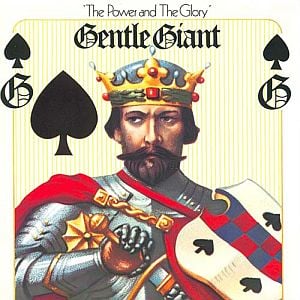
'The Power and the Glory' by Gentle Giant (1974)


What can one say about a band like Gentle Giant? You'd have to stick with the facts: 4 multi-instrumentalists from England who strove to push the boundaries of popular music...at the risk of becoming very unpopular. 'The Power and the Glory' is the sixth record released by GG during the height of 1970's progressive rock. Of course they didn't (and still don't) prefer association with such a 'narrow' moniker. Why? Because they were true artists. True artists despise the four walls it takes to package their output; hence the term 'starving artist' which this band was surely inhabited by. The great thing is, they avoided those four walls by looking to the sky, always reaching beyond what they - or anyone else - had previously done. Only in their later albums would they begin 'selling out' as some might say, seeking a broader audience. Of course, the band's horizons were the only thing broad about them which only won over the narrow strip of audience with broad musical taste - even in their heyday - and never reached a 'broad' audience (because of their narrow musical tastes). Their later material only served to disappoint their faithful fans and implode the discouraged band. Pretty epic failure.
Personally, I love every GG album I've heard so far, but I find myself listening to this one most often. Unlike the prog rock bands of the time, Giant were not into 22 minute long songs, and stayed away from wandering passages of noodling. On the other hand it is difficult to discern whether the intention in many passages is to be equally difficult for the audience to listen to as it must have been for the band to play. As with most of the bands other records this a treasure trove of rhythmic and melodic interplay. The first song, 'Proclamation' is one of GG's tightest pieces, encompassing the essence of the groups capabilities...including catchiness! There are elements of heavy rock drumming paired with aggressive bass, off center guitar licks balanced by a funky, infectious keyboard hook which constitutes the songs theme. The vocals are equally off kilter, twisting into odd melodies like question marks that rupture into an excruciatingly dissonant chorus. (It almost sounds like a mistake!) But make no mistake, everything Gentle Giant did was rehearsed to perfection and duly deliberate. Every bit of their musicianship is wrung out into the record...like nearly all their albums. This includes their capacity for restraint, in songs like 'Aspirations' which is plaintive and simple, with a comparatively soothing melody.
One thing that keeps me interested in their challenging music is the groups dependability in creating variations on a theme. GG often revisit an ovurture in a different key, rythm, or even time signature. This element either turns a listener onto or off of their music. People's minds are programmed for near exact repetitions of choruses, melodies, drum beats etc. If a song isn't doing this, people start scratching their heads because it sounds 'wrong'. GG's body of work is for those who are annoyed by insessant repetition of a 1.5 second hook.
Equally amazing, GG played their own instruments AND eachothers...as well as manning auxiliary percussion, brass and woodwind, AND performed insanely difficult vocal harmonies in combating rhythms. The rehearsal implications in a single song by this group are staggering...yet they managed to release at least one album a year from 1970 to 1980!
'The Power and the Glory' is - you guessed it - a concept album. The story is simple: a figure rises to political power out of a will to do good but becomes what he set out to usurp. Unlike some records of the time that claim to be concept albums, 'The Power and the Glory' really sticks it out. Again, everything is deliberate and furthermore done with meaning. The lyrics weren't jotted down to justify a melody, nor is the music written to support the lyrics. They are equal intities, either of which a listener can enjoy throughout. The music varies stylistically from minstrel musings to fusion-jazz to outright bizarre, otherworldly terrain. The lyrics explore various angles of the story arch and keep the narrative alive.
If you like challenging music that rewards with a reliable arch, masterful musicianship, and amusing composition, then sit back and relish in this - or any other - Gentle Giant masterpiece! Not for the sound bite generation, this cones as one of my highest recommendations for those who take pride in their open mindedness! Put yourself to the test with 'The Power and the Glory'.
SIDENOTE: The 2004 reissue of this album includes the deleted title track, a single which the band deemed unacceptably 'poppy', but I find effective in both rounding the album concept out and upping the track count. In addition, it's just a cool song. Should have kept it on there. Find the reissue on Amazon real cheap~
MUSED: 90%
ABUSED: 10%

Tuesday, November 8, 2011

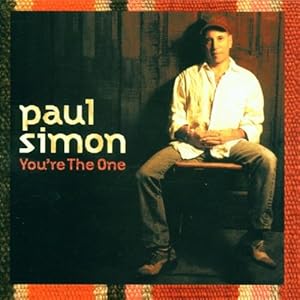
'You're the One' by Paul Simon (2000)


This is another album I had floating around in my collection for a while before I got around to diving into it. Surely to the surprise of those of you who know me, I am a believer in the idea that if you feel around in the dark with any music long enough, you'll find your own VIP entrance somewhere. Though you may not thoroughly enjoy the music, you'll at least gain an understanding, maybe an appreciation for the artists intentions. Sometimes you find less than you hoped for, or you just downright hate it even after giving it a chance. Other times you're surprised, or you even fall head over heels. Such was my case with 'You're the One.'
Paul Simon's quiet, underproduced later career efforts are often overshadowed by his earlier successes. The 1990's were a relatively quiet time in Simon's career. His 1990 follow up to 1986's blockbuster 'Graceland' was a south African flavored collection of non-radio, rhythm and lyric driven tunes called 'Rythm of the Saints.' Several years passed and in 1997 'Songs From the Capeman', drawn half from cast recordings of the Simon penned, abandoned broadway musical, was released. A few quiet years later, this album arrives. A return to familiar territories throughout Paul's career, 'You're the One' is rootsy but not folky, melodic but not sugary, and as usual, profound but concise.
Immediately there is more than a hint of foreign flavor. Congas, bongos, bells, pan flute, and a myriad of auxiliary percussion flit around the drum kit, or render it obsolete in some songs. Again, the music has been written around a 'rhythmic premise', as Simon calls it. This aspect of the tunes alone is really enriching, whether you mentally isolate it or listen to it as a dialog with the other instruments. It gives this album a live in the studio feel. Of course, this is a Paul Simon album and the rhythm section remains in it's place, never obstructing the center of attention: the songwriting.
This record is a shining demonstration of Simon's enduring genius. Much of the material here is again familiar Paul Simon turf, from wholistic musings on the enderance love and partnership, to those of age and existence. The title track is suspiciously straightforward until mid-song when the title bitterly reappears as an accusation. 'Darling Lorraine' is a grooving narrative that I found to strongly echoe 'Train in the Distance' from the 'Hearts and Bones' album. 'Old' is an upbeat acknowledgement of age while it's author simultaneously contemplates the often shortsighted notion of deeming something (or someone) 'old'. A number of the songs here make use of Simon's nack for expressing an idea with a collage of superficially random artifacts and leading the listener to seeing them his way...after a bit of thought. This accounts for a lot of the fun on this record, but it endures into the melodic sense of it's composition. As always these melodies aren't simply listenable, but immediately engaging, and emotionally punctuate every song. Maybe there's no 'Mother and Child Reunion' or 'Kodachrome', but everything here more than does the trick.
It's easy to go on about Paul Simon's strengths. He's terrific with words, always conceptually innovative, works with top notch musicians, and the songs are catchy as hell. 9 times out of ten, the lyrics, compositions, and performances congeal effortlessly on a Paul Simon album to make something more. Once in a while however he slips up. On 'You're the One', there is a song called 'Pigs, Sheep and Wolves' where artistic liberty kind of gets away with the writer. The words are pretty neat and the concept is one of those things that as a songwriter I ask 'why didn't I think of that?' but Paul's delivery of the song, his embodiment of it's characters, harkens back to his performances on 'Songs From the Cape Man'. I guess it helps break up the record but this is a review. If I have to say something bad about this album, 'Pigs, Sheep and Wolves' makes me scratch my head.
I recommend downloading this collection from iTunes since it comes with three live performances of songs from this album as opposed to a live 'Me and Julio...' or something.
'You're the One' reminds fans and skeptics alike that Paul Simon remains in the new millennium comfortably at the top of his game.
MUSED 85% ABUSED 15%

Tuesday, November 1, 2011

'Brian Wilson presents SMiLE' vs 'The Beach Boys SMiLE Sessions'


I have to admit I've been looking forward to writing this review! After listening extensively to both Brian Wilson's finished album and The Beach Boys parent recordings, I'm somewhat surprised at the verdict here.
I picked up BWPS a few years ago, never got into it and sold it back to the used section, bought it again a year or two later, and it sat there. A few months after that I began listening to it on weekly 2 1/2 hour drives I was taking to and from a train station. On these trips I became acquainted and ultimately fell in love with SMiLE. The album is afterall written to feel like a journey.
What's so special about SMiLE? It was unlike anything else done in the music world, and certainly a departure from the radio single-driven Beach Boys. It's like cubist-Americana-pop...not super easy listening. This is where Wilson went from virtuoso songwriter to avant garde. SMiLE is a collage of sound effects, snippets of regional American standards and folk songs, absurdity, dramatic and often surreal narrative,topped off with those unmistakable voices and arrangement. Wilson had been writing and tracking with renowned studio musicians while the band was out touring. When they returned to find a mural of less than accessible musical poetry, instead of 2 or 3 radio songs framing a record, there was resistance. As the process rolled forward, buzz mounted around Brian's so-called 'teenage symphony to God'. Brian saw himself in a production race with The Beatles (Paul Mccartney even stopped in to see what Brian was up to in the studio and was recorded biting into a carrot for the song 'Vega-Tables'!) At this time Brian was also experimenting with hallucinogens and marijuana. With the additional stress of the record label and it's deadline, Brian broke down and shelved the album. In the decades that followed, hints of SMiLE were let out on various Beach Boys records and compilations. But Brian wouldn't even speak about the abandoned project...Cut to 2003. Brian's band convinced him to return to the master tapes, assemble a final track list and order, and bring back lyricist Van Dyke Parks, who wrote the lyrics for SMiLE back in the 60's, to finish the job. Finally, Wilson performed it all over the world, and then released the album in 2004. So the question is posed with this new release: is this 2011 Sessions collection worth picking up...?
In my opinion, The SMiLE Sessions is for completionists. I say this without animosity because I enjoy the Sessions album, but I felt like we were all hoping for a more finished album. For example, some of the songs have partial or no vocals. I can only speculate that the vocals for these numbers weren't yet written or simply hadn't been recorded. Some songs sound unmixed, like piano parts or other sections of the band are 'far away'. I'm assuming here that the producers wished to leave the mixes untouched (since this is a sessions collection and not really intended to be THE album). In addition, these recordings are mono so I'm sure that the old school recording method of 'bouncing' tracks created some impenetrable mixing obstacles. Without utilizing polyphonic sound separation (a very new technology which would heavily weigh on the sound quality of the recordings, making the resulting stereo recordings pointless anyway) it's not possible to intelligibly re-mix music of that period. The Sessions collection is far from a loss. The listener does get a good peek at much of the work while in progress. For those who own the Brian Wilson 2004 album, there is the promise of hearing Brian and the boys deliver stellar vocal performances. Brain's camp of modern devotees do a certain brand of justice to this musical collage, but they sound stiff in comparison to the original, youthful melancholy the Beach Boys graced songs like 'Wonderful' and 'Our Prayer'with. This is certainly the Sessions albums strength, which is reason enough to go out and buy it. Brian at twenty-something beats Brian at sixty-something hands down. Additionally, it's been cleansed and remastered so it's got a serious leg up on the bootleg that's been circulating for eons. One thing that floored me when comparing these two recordings, is the faithfully reproduced sound production, instrumentation, and performances of the original Beach Boys Sessions on Wilson's '04 version. BWPS is so true to the sonic footprint of the original recordings that I'd venture to say a lot of the same microphones were employed during tracking. It is incredible, and fun to compare just how close the producers and musicians were able to get to the originals! Scant liberty was taken throughout the major portion of the material that simply had to be reproduced to bring the album 'up to date'. This is one good reason to have both sets. Regretfully we are still left to wonder what exactly SMiLE would have been; The unfinished writing and recording, and Brian's arrangement of modular music blocks which could only be realized in that time and place, and would surely have differed from the 2004 album. If you're looking for the SMiLE that will take you on a whimsical journey, The Beach Boys Sessions is not it. You'll need to pick up Wilson's fully realized, if long overdue, '04 version recorded with the touring band. This is as close as we will get to Brian's seminal vision of SMiLE. The Sessions simply portray a half finished masterpiece, a concept still full of holes, still incapable of making it's point, rendering the this new Sessions collection marginally useful to the mild mannered listener, but a fascinating biopic slice into the meat and potatoes of the young Wilson genius at work - for those interested...
Brian Wilson Presents SMiLE
MUSED: 80% ABUSED: 20%
The Beach Boys SMiLE Sessions
MUSED: 55% ABUSED: 45%

Wednesday, July 13, 2011

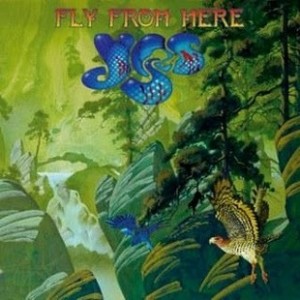
'Fly From Here' by Yes, 2011


The 1970's are regarded as Yes's best years. Prior to decades spackled with endless personnel changes (the bands rehearsal space should have a revolving door...or two) and numerous progressively inconsequential releases, Yes was selling out arenas and exceeding the reach and grasp of most of their contemporaries. Their 1970's releases ('The Yes Album', 'Fragile', 'Close to the Edge', 'Tales From Topographic Oceans', 'Relayer', 'Going For the One', 'Tormato', and 'Drama') which explored various philosophical and theolgical topics, staggering rhythmic interplay, and accessible yet sophisticated melodic composition cemented the band as the leading pioneers of Art Rock, or Progressive Rock. By the start of the 1980's however Yes began a swift departure from their signature sound. Differences concerning the groups direction ultimately led to split ups, unfocused writing, and lots of let down fans up into the 2000's. 'Fly From Here' sounds like Yes in their prime. New lead singer Benoit David echoes Jon Andersen's high tenor and melodic sensibilities, yet makes the songs his own. Left behind are the dream-catching,middle-aged/new-age lyrics of laborious albums like 'Union' and 'Magnification'. Benoit sings a simple but metaphoric narrative centered in an airfield for the 25 minute title track. Yes alumni Alan White and Chris Squier striate counter rhythms with virtuoso guitarist Steve Howe while keyboardist Geoff Downes glues it all together to refreshingly familiar effect. The results are more memorable than they've been in 30 years and genuinely engage the listener for the records duration. I would attribute this to the maleable enthusiasm running through each piece. Yes play with intent and energy; they sound young again, which is what fans of most 35 year old bands can usually only dream about. Their performances are even further enhanced by producer Trevor Horn's immaculate, glassy production as opposed to their 1990's albums which sound plastic and thin by comparison. It is an overwhelming relief to hear Yes return to their trademark sound with such vigor at this late point in their career. Not much more to say other than that minus the absence of original vocalist and keyboard wizard Jon Andersen and Rick Wakeman, 'Fly From Here' is what Yes fans have been waiting for for 3 decades. Stellar album! MUSED: 85% ABUSED: 15%

Monday, June 27, 2011

"Arthur" by The Kinks, 1969


The last band I'd expect to create concept albums is The kinks. Goes to show how much I knew about them! It turns out they made several over the years. 'Arthur or The Decline and Fall of the British Empire' however was intended as an actual soundtrack, or songtrack, for a planned television feature. What came out was a playful but thoughtful collection of songs which deliver the theme far more effectively than its followers like Pink Floyd's 'The Wall'. Ray Davies lyrics center around humdrum middle-class life in post WWII England. Written in 1969, it was a picture of the times. Don't let the arch of the album fool you - 'Arthur' is easy to get into and leaves you wanting to give it more spin time. The first song 'Victoria' rocks front to back; trademark 1960's/70's Kinks. Much of rest of the songs are late British invasion style rock. A refreshing thing about this 1960's rock narrative is that it avoids watering itself down in cliche psychedelia and preachiness...the subject matter is approached dutifully and with taste in songs like 'Shangri La' and 'Yes Sir, No Sir' in which matters like individuality, self awareness, financial security, and illusions of personal success are described with an almost comic levity: Davies explores the double entendre of domestic life stating at first "Now that you've found your paradise/ This is your kingdom to command/ You can go outside and polish your car/ Or sit by the fire in your Shangri La"...but later: "Put on your slippers and sit by the fire/You've reached your top and you just can't get any higher"..."You need not worry, you need not care/ You can't go anywhere" Davies' writing is more thought provoking than preachy in these songs, even if they do take a stance. Aside from the lyrics, 'Arthur' is as easy to listen to as any of The Kinks' well known work, and at times more interesting musically. Aside from expected tracks like 'Victoria' and 'Drivin' Much of this work can be likened to very high quality deep cuts: not overly catchy, but still tuneful with strong replay value. Between the lyrical content which as a whole really does put a listener in the shoes of the people, and the smart yet direct musical content The Kinks are known for, this is a tight, awesome album which effortlessly does what it intends to do on all the intended levels. As a side note I suggest acquiring the 1998 CD reissue of 'Arthur' for the bonus tracks ('Plastic Man', 'King Kong', and several others) which are cut from the same cloth and every bit as enjoyable as the original release, and likely removed for time constraints in 1969. MUSED: 90% ABUSED 10%