Tuesday, November 8, 2011

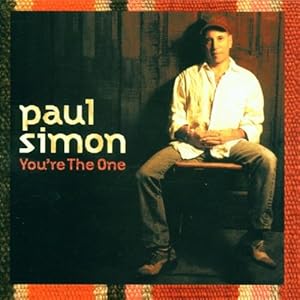
'You're the One' by Paul Simon (2000)


This is another album I had floating around in my collection for a while before I got around to diving into it. Surely to the surprise of those of you who know me, I am a believer in the idea that if you feel around in the dark with any music long enough, you'll find your own VIP entrance somewhere. Though you may not thoroughly enjoy the music, you'll at least gain an understanding, maybe an appreciation for the artists intentions. Sometimes you find less than you hoped for, or you just downright hate it even after giving it a chance. Other times you're surprised, or you even fall head over heels. Such was my case with 'You're the One.'
Paul Simon's quiet, underproduced later career efforts are often overshadowed by his earlier successes. The 1990's were a relatively quiet time in Simon's career. His 1990 follow up to 1986's blockbuster 'Graceland' was a south African flavored collection of non-radio, rhythm and lyric driven tunes called 'Rythm of the Saints.' Several years passed and in 1997 'Songs From the Capeman', drawn half from cast recordings of the Simon penned, abandoned broadway musical, was released. A few quiet years later, this album arrives. A return to familiar territories throughout Paul's career, 'You're the One' is rootsy but not folky, melodic but not sugary, and as usual, profound but concise.
Immediately there is more than a hint of foreign flavor. Congas, bongos, bells, pan flute, and a myriad of auxiliary percussion flit around the drum kit, or render it obsolete in some songs. Again, the music has been written around a 'rhythmic premise', as Simon calls it. This aspect of the tunes alone is really enriching, whether you mentally isolate it or listen to it as a dialog with the other instruments. It gives this album a live in the studio feel. Of course, this is a Paul Simon album and the rhythm section remains in it's place, never obstructing the center of attention: the songwriting.
This record is a shining demonstration of Simon's enduring genius. Much of the material here is again familiar Paul Simon turf, from wholistic musings on the enderance love and partnership, to those of age and existence. The title track is suspiciously straightforward until mid-song when the title bitterly reappears as an accusation. 'Darling Lorraine' is a grooving narrative that I found to strongly echoe 'Train in the Distance' from the 'Hearts and Bones' album. 'Old' is an upbeat acknowledgement of age while it's author simultaneously contemplates the often shortsighted notion of deeming something (or someone) 'old'. A number of the songs here make use of Simon's nack for expressing an idea with a collage of superficially random artifacts and leading the listener to seeing them his way...after a bit of thought. This accounts for a lot of the fun on this record, but it endures into the melodic sense of it's composition. As always these melodies aren't simply listenable, but immediately engaging, and emotionally punctuate every song. Maybe there's no 'Mother and Child Reunion' or 'Kodachrome', but everything here more than does the trick.
It's easy to go on about Paul Simon's strengths. He's terrific with words, always conceptually innovative, works with top notch musicians, and the songs are catchy as hell. 9 times out of ten, the lyrics, compositions, and performances congeal effortlessly on a Paul Simon album to make something more. Once in a while however he slips up. On 'You're the One', there is a song called 'Pigs, Sheep and Wolves' where artistic liberty kind of gets away with the writer. The words are pretty neat and the concept is one of those things that as a songwriter I ask 'why didn't I think of that?' but Paul's delivery of the song, his embodiment of it's characters, harkens back to his performances on 'Songs From the Cape Man'. I guess it helps break up the record but this is a review. If I have to say something bad about this album, 'Pigs, Sheep and Wolves' makes me scratch my head.
I recommend downloading this collection from iTunes since it comes with three live performances of songs from this album as opposed to a live 'Me and Julio...' or something.
'You're the One' reminds fans and skeptics alike that Paul Simon remains in the new millennium comfortably at the top of his game.
MUSED 85% ABUSED 15%

Tuesday, November 1, 2011

'Brian Wilson presents SMiLE' vs 'The Beach Boys SMiLE Sessions'


I have to admit I've been looking forward to writing this review! After listening extensively to both Brian Wilson's finished album and The Beach Boys parent recordings, I'm somewhat surprised at the verdict here.
I picked up BWPS a few years ago, never got into it and sold it back to the used section, bought it again a year or two later, and it sat there. A few months after that I began listening to it on weekly 2 1/2 hour drives I was taking to and from a train station. On these trips I became acquainted and ultimately fell in love with SMiLE. The album is afterall written to feel like a journey.
What's so special about SMiLE? It was unlike anything else done in the music world, and certainly a departure from the radio single-driven Beach Boys. It's like cubist-Americana-pop...not super easy listening. This is where Wilson went from virtuoso songwriter to avant garde. SMiLE is a collage of sound effects, snippets of regional American standards and folk songs, absurdity, dramatic and often surreal narrative,topped off with those unmistakable voices and arrangement. Wilson had been writing and tracking with renowned studio musicians while the band was out touring. When they returned to find a mural of less than accessible musical poetry, instead of 2 or 3 radio songs framing a record, there was resistance. As the process rolled forward, buzz mounted around Brian's so-called 'teenage symphony to God'. Brian saw himself in a production race with The Beatles (Paul Mccartney even stopped in to see what Brian was up to in the studio and was recorded biting into a carrot for the song 'Vega-Tables'!) At this time Brian was also experimenting with hallucinogens and marijuana. With the additional stress of the record label and it's deadline, Brian broke down and shelved the album. In the decades that followed, hints of SMiLE were let out on various Beach Boys records and compilations. But Brian wouldn't even speak about the abandoned project...Cut to 2003. Brian's band convinced him to return to the master tapes, assemble a final track list and order, and bring back lyricist Van Dyke Parks, who wrote the lyrics for SMiLE back in the 60's, to finish the job. Finally, Wilson performed it all over the world, and then released the album in 2004. So the question is posed with this new release: is this 2011 Sessions collection worth picking up...?
In my opinion, The SMiLE Sessions is for completionists. I say this without animosity because I enjoy the Sessions album, but I felt like we were all hoping for a more finished album. For example, some of the songs have partial or no vocals. I can only speculate that the vocals for these numbers weren't yet written or simply hadn't been recorded. Some songs sound unmixed, like piano parts or other sections of the band are 'far away'. I'm assuming here that the producers wished to leave the mixes untouched (since this is a sessions collection and not really intended to be THE album). In addition, these recordings are mono so I'm sure that the old school recording method of 'bouncing' tracks created some impenetrable mixing obstacles. Without utilizing polyphonic sound separation (a very new technology which would heavily weigh on the sound quality of the recordings, making the resulting stereo recordings pointless anyway) it's not possible to intelligibly re-mix music of that period. The Sessions collection is far from a loss. The listener does get a good peek at much of the work while in progress. For those who own the Brian Wilson 2004 album, there is the promise of hearing Brian and the boys deliver stellar vocal performances. Brain's camp of modern devotees do a certain brand of justice to this musical collage, but they sound stiff in comparison to the original, youthful melancholy the Beach Boys graced songs like 'Wonderful' and 'Our Prayer'with. This is certainly the Sessions albums strength, which is reason enough to go out and buy it. Brian at twenty-something beats Brian at sixty-something hands down. Additionally, it's been cleansed and remastered so it's got a serious leg up on the bootleg that's been circulating for eons. One thing that floored me when comparing these two recordings, is the faithfully reproduced sound production, instrumentation, and performances of the original Beach Boys Sessions on Wilson's '04 version. BWPS is so true to the sonic footprint of the original recordings that I'd venture to say a lot of the same microphones were employed during tracking. It is incredible, and fun to compare just how close the producers and musicians were able to get to the originals! Scant liberty was taken throughout the major portion of the material that simply had to be reproduced to bring the album 'up to date'. This is one good reason to have both sets. Regretfully we are still left to wonder what exactly SMiLE would have been; The unfinished writing and recording, and Brian's arrangement of modular music blocks which could only be realized in that time and place, and would surely have differed from the 2004 album. If you're looking for the SMiLE that will take you on a whimsical journey, The Beach Boys Sessions is not it. You'll need to pick up Wilson's fully realized, if long overdue, '04 version recorded with the touring band. This is as close as we will get to Brian's seminal vision of SMiLE. The Sessions simply portray a half finished masterpiece, a concept still full of holes, still incapable of making it's point, rendering the this new Sessions collection marginally useful to the mild mannered listener, but a fascinating biopic slice into the meat and potatoes of the young Wilson genius at work - for those interested...
Brian Wilson Presents SMiLE
MUSED: 80% ABUSED: 20%
The Beach Boys SMiLE Sessions
MUSED: 55% ABUSED: 45%

Wednesday, July 13, 2011

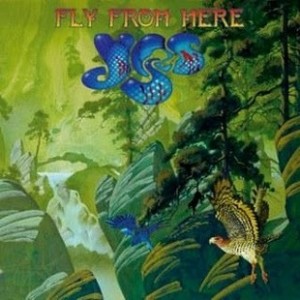
'Fly From Here' by Yes, 2011


The 1970's are regarded as Yes's best years. Prior to decades spackled with endless personnel changes (the bands rehearsal space should have a revolving door...or two) and numerous progressively inconsequential releases, Yes was selling out arenas and exceeding the reach and grasp of most of their contemporaries. Their 1970's releases ('The Yes Album', 'Fragile', 'Close to the Edge', 'Tales From Topographic Oceans', 'Relayer', 'Going For the One', 'Tormato', and 'Drama') which explored various philosophical and theolgical topics, staggering rhythmic interplay, and accessible yet sophisticated melodic composition cemented the band as the leading pioneers of Art Rock, or Progressive Rock. By the start of the 1980's however Yes began a swift departure from their signature sound. Differences concerning the groups direction ultimately led to split ups, unfocused writing, and lots of let down fans up into the 2000's. 'Fly From Here' sounds like Yes in their prime. New lead singer Benoit David echoes Jon Andersen's high tenor and melodic sensibilities, yet makes the songs his own. Left behind are the dream-catching,middle-aged/new-age lyrics of laborious albums like 'Union' and 'Magnification'. Benoit sings a simple but metaphoric narrative centered in an airfield for the 25 minute title track. Yes alumni Alan White and Chris Squier striate counter rhythms with virtuoso guitarist Steve Howe while keyboardist Geoff Downes glues it all together to refreshingly familiar effect. The results are more memorable than they've been in 30 years and genuinely engage the listener for the records duration. I would attribute this to the maleable enthusiasm running through each piece. Yes play with intent and energy; they sound young again, which is what fans of most 35 year old bands can usually only dream about. Their performances are even further enhanced by producer Trevor Horn's immaculate, glassy production as opposed to their 1990's albums which sound plastic and thin by comparison. It is an overwhelming relief to hear Yes return to their trademark sound with such vigor at this late point in their career. Not much more to say other than that minus the absence of original vocalist and keyboard wizard Jon Andersen and Rick Wakeman, 'Fly From Here' is what Yes fans have been waiting for for 3 decades. Stellar album! MUSED: 85% ABUSED: 15%

Monday, June 27, 2011

"Arthur" by The Kinks, 1969


The last band I'd expect to create concept albums is The kinks. Goes to show how much I knew about them! It turns out they made several over the years. 'Arthur or The Decline and Fall of the British Empire' however was intended as an actual soundtrack, or songtrack, for a planned television feature. What came out was a playful but thoughtful collection of songs which deliver the theme far more effectively than its followers like Pink Floyd's 'The Wall'. Ray Davies lyrics center around humdrum middle-class life in post WWII England. Written in 1969, it was a picture of the times. Don't let the arch of the album fool you - 'Arthur' is easy to get into and leaves you wanting to give it more spin time. The first song 'Victoria' rocks front to back; trademark 1960's/70's Kinks. Much of rest of the songs are late British invasion style rock. A refreshing thing about this 1960's rock narrative is that it avoids watering itself down in cliche psychedelia and preachiness...the subject matter is approached dutifully and with taste in songs like 'Shangri La' and 'Yes Sir, No Sir' in which matters like individuality, self awareness, financial security, and illusions of personal success are described with an almost comic levity: Davies explores the double entendre of domestic life stating at first "Now that you've found your paradise/ This is your kingdom to command/ You can go outside and polish your car/ Or sit by the fire in your Shangri La"...but later: "Put on your slippers and sit by the fire/You've reached your top and you just can't get any higher"..."You need not worry, you need not care/ You can't go anywhere" Davies' writing is more thought provoking than preachy in these songs, even if they do take a stance. Aside from the lyrics, 'Arthur' is as easy to listen to as any of The Kinks' well known work, and at times more interesting musically. Aside from expected tracks like 'Victoria' and 'Drivin' Much of this work can be likened to very high quality deep cuts: not overly catchy, but still tuneful with strong replay value. Between the lyrical content which as a whole really does put a listener in the shoes of the people, and the smart yet direct musical content The Kinks are known for, this is a tight, awesome album which effortlessly does what it intends to do on all the intended levels. As a side note I suggest acquiring the 1998 CD reissue of 'Arthur' for the bonus tracks ('Plastic Man', 'King Kong', and several others) which are cut from the same cloth and every bit as enjoyable as the original release, and likely removed for time constraints in 1969. MUSED: 90% ABUSED 10%

Tuesday, June 21, 2011

"Charles Ives | Psalms" (2007)


'Psalms' is a partial collection of the classical composer Charles Ives' vocal ensemble composition set to psalms written or reworked between circa 1887 and 1924. I would not normally recommend Ives for mild mannered listeners but this work is absolutely gorgeous in its polytonality - ingenious weaving of dissonance and harmony, this is the Frank Zappa of the classical world...and then some. The works in this collection are of course challenging, and even genuinely alarming at times, but highly listenable. Ives' compositions for psalms are my favorite of his expansive work because a choir - especially a world renowned choir like the SWR Vokalensemble Stuttgart - gets a lot more lead out of the music than an orchestra. All the major earmarks of Ivesian composition seem to be in full swing for the duration of each psalm. My qualm with these particular recordings is that chorus master Marcus Creed fails to allow this material to breath at times. Psalm 67 (track 3 in this collection) is an example of the director strangling the musics impact as it feels rushed and unsubstantiated - though I can understand this style of directing if Creed is perhaps attempting to abbreviate passages to aid unaccustomed audiences in perceiving the various, often bitonally striated melodies of the pieces...I still feel the conductor could have left time to let the emotional impact of the work shine through - though his interpretation is otherwise pretty spotless. This is undeniably epic material - reasonably interpreted. The liner notes for 'Psalms' are a small treasure, offering track by track insight into the complex inner workings of the pieces, as well as Ives symbollically willful use of harmony and voicing in reference to the Psalter itself. Any Charles Ives you can get your hands on is well worth it for all the musics numerous strengths, but 'Psalms' is a real showcase of a talented, modern choir singing some of the most difficult work by an already challenging composer...but at minimal expense the listener! Additionally I've had trouble finding many other recordings of Ives' psalms, so if you're in the market for semichallening, highly evocative choral music unlike anything you've heard before, check this one out. Oh, and keep the lights on...MUSED: 85% ABUSED: 15%

Welcome~

Letter from the editor:
HEY! I've been throwing around the notion of blogging music reviews for some time...and now I'm committing. I will bring all my knowledge to the table. What knowledge? I've studied music scholastically and in my spare time for years and I am a tireless musician myself. My released body of compositional work consists of two records 'THUS' (2006) and 'THUS II' (2011). Ive done some live engineering and extensive production work on my own and other artists recordings after attending Full Sail University majoring in Recording Arts. I'm a fanatic for the album as an artform. Examples include Close to the Edge (Yes, 1973), SMiLE (Brian Wilson/The Beach Boys), We're Only In It For the Money (Frank Zappa & The Mothers of Invention, 1968) and so on...you may notice these are all pretty much rock records...I promise to publish reviews on an eclectic variety of albums. These will include compilations, EPs, and even soundtracks. All formats and all genres. Mused or abused, there will be no limits and no sensors here...the way all music should be!